
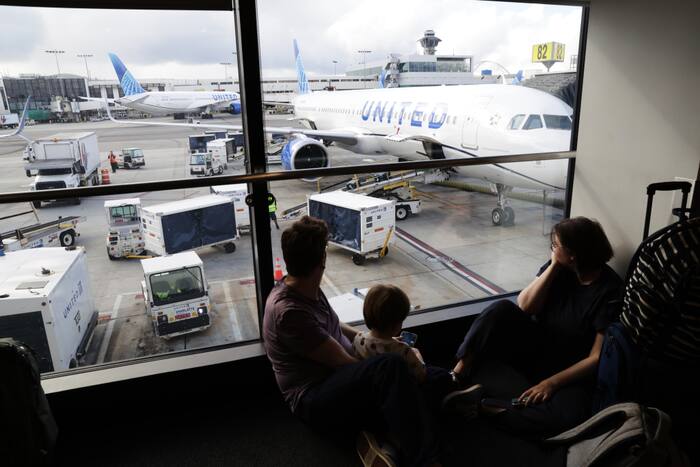
A nationwide ground stop ordered by the Federal Aviation Administration on Friday left travelers scrambling to figure out what happens next — and whether they can get their money back.
The FAA ordered the ground stop Nov. 13 after communications problems affected air traffic control centers across the country. The disruption led to widespread flight delays and cancellations.
But even though the FAA ordered planes to stay on the ground, airlines still have to follow federal passenger refund rules.
Yes. According to the U.S. Department of Transportation, if an airline cancels your flight and you choose not to travel, you’re entitled to a refund — regardless of what caused the cancellation.
That includes nonrefundable tickets.
Passengers also do not have to accept airline credits or travel vouchers instead of a refund if they qualify for their money back.
The important distinction is that the airline must cancel the flight. An FAA ground stop alone does not automatically make every ticket refundable.
Those are different from refunds.
Airlines are not universally required to provide free rebooking, hotel accommodations or meal vouchers when a disruption is outside their control, such as an FAA ground stop.
However, airlines can offer additional assistance.
United and Delta have announced travel waivers for eligible passengers affected by the disruption. These waivers can allow travelers to change their flights without certain fees, depending on the airline’s terms.
‘A travel waiver is not the same as a refund. It’s designed to help passengers who still want to reach their destinations.
Travelers should check directly with their airline to find out which flights qualify and what assistance is available.
Karina Islam, a travel advisor with Grand Travel & Cruise in Sugar Land, recommends contacting the airline or the travel advisor who booked the trip.
“So right now, it’s very important for everyone to stay calm and keep their patience,” Islam said. “Of course, try to talk to your travel advisor or whoever you booked through. You want to definitely get to that ticket counter and see what are the next available options for you to get out.”
Islam also warned that travelers may need patience as airlines work to get passengers moving again.
“Definitely get to those ticket counters, call your advisor, see what they can do on their end,” she said. “And unfortunately, we just have to be patient and stick with the lines.”
Passengers should first check their airline’s website or app for updates and rebooking options. Those already at the airport can also speak with an airline representative.
Travelers with nonrefundable tickets should avoid canceling their reservations themselves before checking whether their airline has canceled the flight or issued a travel waiver.
The U.S. Department of Transportation provides several resources for travelers:
Under federal rules, qualifying refunds generally must be returned to the original form of payment, not simply issued as travel credit.
For passengers who paid by credit card, refunds are generally due within seven business days. Other payment methods generally have a 20-calendar-day deadline.
The bottom line: If your airline cancels your flight and you decide not to travel, federal rules protect your right to a refund. But if you still need to get home, rebooking options and additional assistance may depend on your airline.


